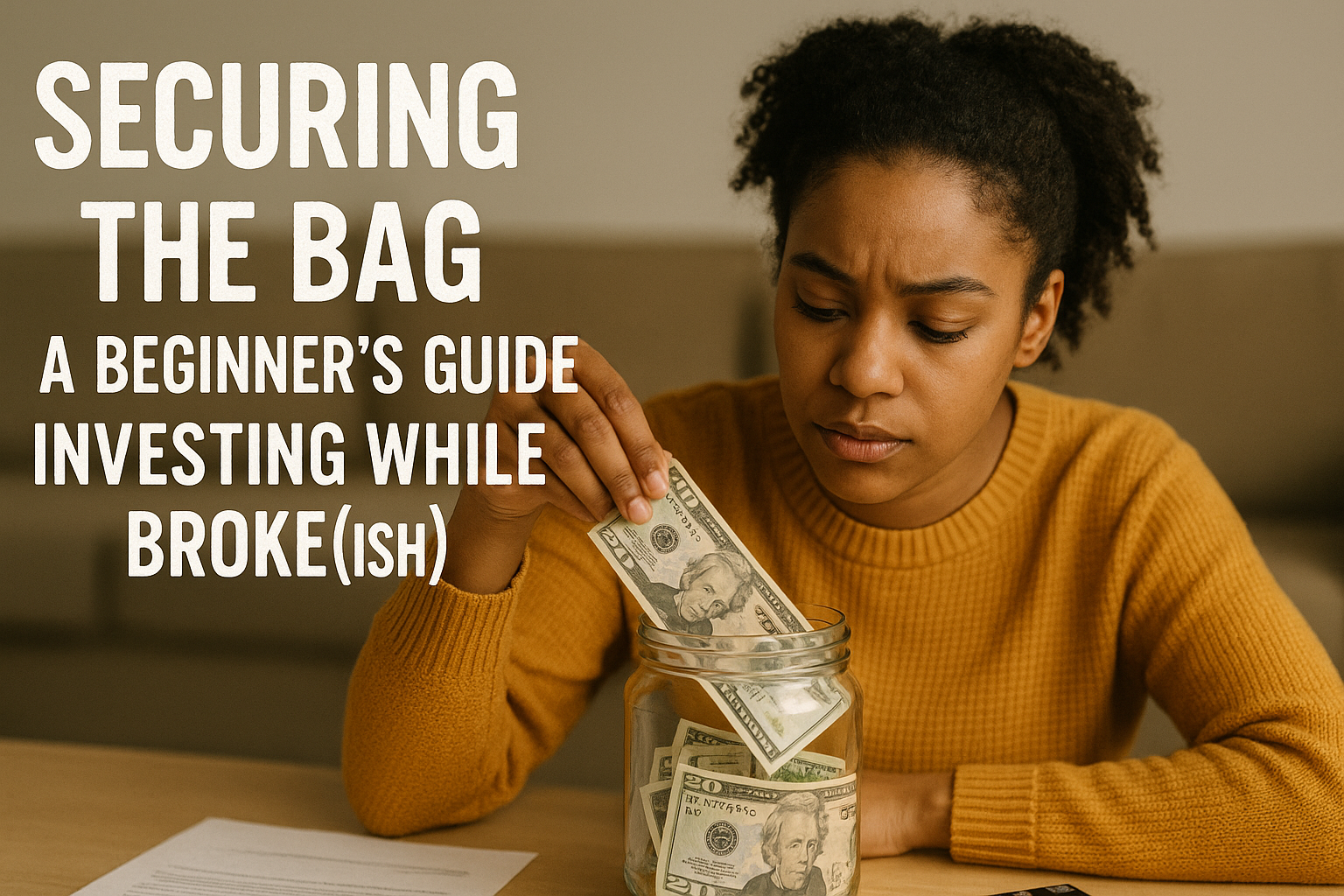
Let's be real for a sec—"investing" can feel like a rich people thing. Like, how am I supposed to buy stock when I'm deciding between gas and groceries? But plot twist: investing isn't about having stacks in the bank. It's about using what little you've got now to create more for future you. This is your permission slip to stop waiting and start growing.
💡 The Big Lie: "You Need to Be Rich to Invest"
This myth is still running wild in the streets. Many of us are taught to hustle hard, save what we can, and maybe think about retirement someday if we're lucky. But that leaves us out of a game we could be winning. Wealth isn't just for trust fund babies—it's for broke college students, single moms, side hustlers, and anyone who's ready to shift their money mindset.
Thanks to technology, investing has never been more accessible. You can literally start with less than the price of a fast food meal. We're talking apps like:
- Acorns – Rounds up your spare change and invests it.
- Stash – Lets you start with just $5 and gives financial education.
- Public – Social investing with zero commissions.
- Robinhood – Commission-free trades for beginners and up.
No need for a suit and tie. No need for $1,000. No need to wait.
📉 But I'm Broke-Broke—Where Does the Money Come From?
Fair question. First step: know where your money is actually going.
Take a week to track every single dollar you spend. Use a free tool like Mint, Truebill, or even a simple notes app. Then, look for leaks:
- Daily $6 coffee? That's $180 a month.
- Subscriptions you forgot about? Cancel 'em.
- Ordering out 4x a week? Cut one day and invest that cash instead.
Example: Let's say you save $25 a week by making lunch at home 2x instead of ordering UberEats. That's $100/month—money that could go into an ETF and start building compound interest.
It's not about depriving yourself. It's about redirecting your dollars.
🔁 The Power of Small Investing
Here's a mind-blowing fact: If you invest just $50 a month into an index fund with a 7% return (average S&P 500 return), you'd have over $6,000 in 7 years. Double that to $100/month and you're talking over $12,000.
Even $10 a week adds up when you stay consistent.
👉🏽 Pro Tip: Automate your investment. Set it and forget it so you're not tempted to skip a month.
📚 Beginner-Friendly Investment Moves
Not sure where to begin? Keep it simple:
- Index Funds – Like S&P 500 funds, these are bundles of top companies. Safe-ish, low-fee, and ideal for beginners.
- ETFs (Exchange-Traded Funds) – Think of them like mutual funds but cheaper and easier to buy. Great for newbies.
- Robo-Advisors – Apps like Betterment or Wealthfront build a portfolio for you based on your goals and risk level.
Start by investing in what you understand. You don't need to be an expert—you just need to start.
📈 Real-Life Examples from the Culture
Ava, 28, Social Worker: Started investing $20/month via Stash after paying off one credit card. Two years later, she's got $850 and counting. "It's not a lot, but it's something. And it feels good to watch it grow."
Jay, 35, Uber Driver: Used Acorns to round up purchases and invest spare change. "I didn't even notice the money was gone. One year later I had $500, and now I'm doubling my deposits."
Tasha, 21, College Student: Bought $10 of Tesla stock using Robinhood. "I just wanted to see how it worked. Now I'm learning about dividends and compounding. It's kinda fun."
🛠️ Tools + Tips to Make it Easy
- Set investment reminders – Weekly check-ins = accountability.
- Follow finance content creators – OUInvest is a vibe for this.
- Start with what you have – Don't wait for a raise or a windfall.
- Use automatic deposits – Treat it like a bill you must pay.
✅ Action Plan for the Week
- Download an investing app (Robinhood, Stash, or Acorns)
- Track your spending for 7 days
- Identify $10-$50/week you can repurpose
- Make your first investment—even if it's $5
- Celebrate like you just made a down payment on your future (because you did)
💬 Final Word
Being "broke(ish)" isn't a dead-end—it's just your starting line. The key is momentum, not perfection. Start where you are, with what you've got. Even baby steps can lead to big financial glow-ups when you give them time to grow.
Investing isn't for later. It's for now.