Picture this:
You download a trading app.
You watch a few stock market videos.
You follow a couple of investing creators online.
Suddenly, you're feeling pretty confident.
You buy a stock in the morning, sell it in the afternoon, make a few bucks, and think:
"Wow... maybe I should quit my job and become a trader."
Not so fast.
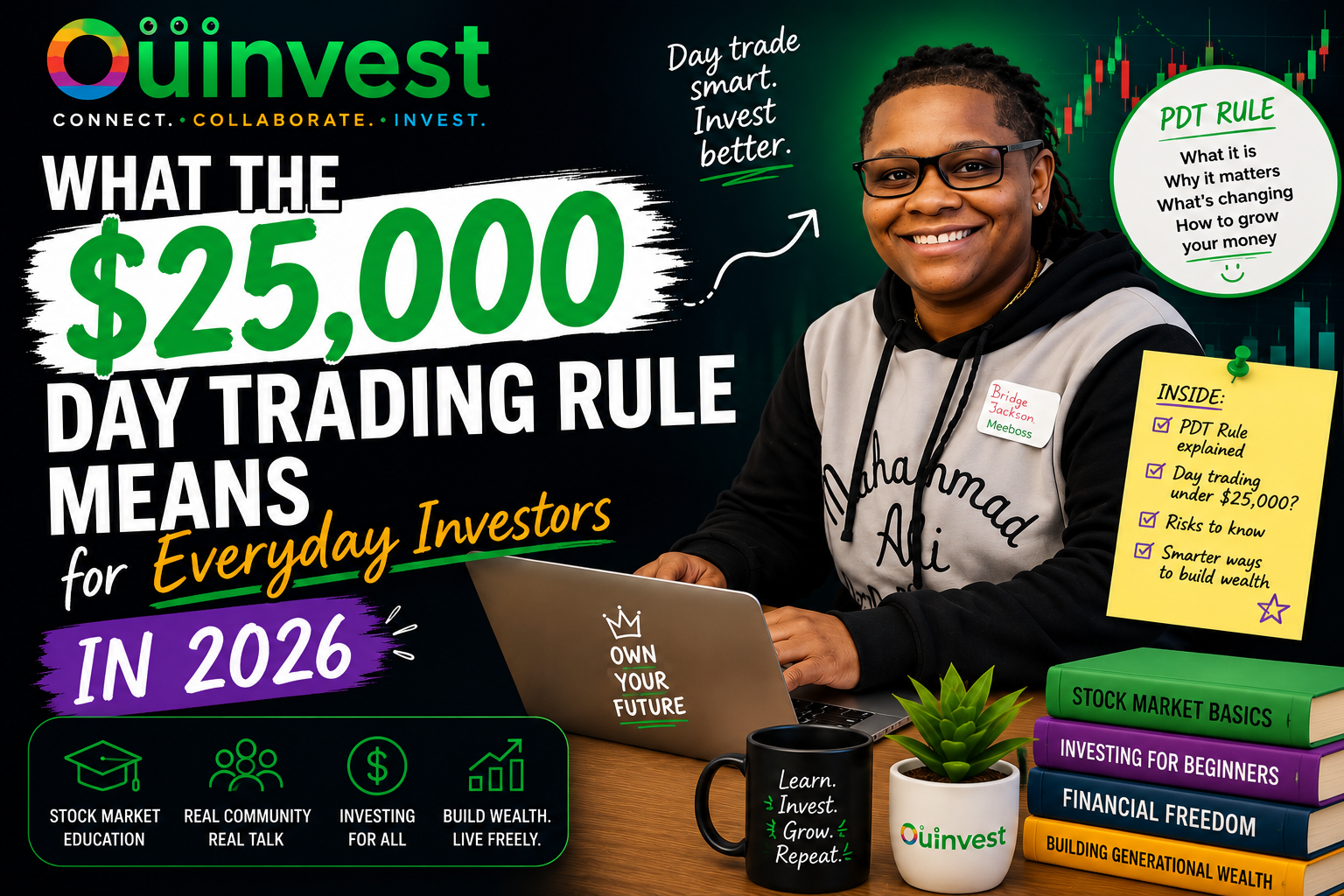
A few days later, your broker hits you with a notification about the Pattern Day Trader Rule (PDT Rule) and suddenly you're wondering why everyone keeps talking about needing $25,000 just to trade stocks.
If you've ever searched "Can I day trade without $25,000?" or "How to day trade with less than $25,000," you're definitely not alone.
Let's break it down.
What Is the Pattern Day Trader Rule (PDT Rule)?
The Pattern Day Trader Rule, often called the PDT Rule, is one of the most talked-about day trading rules for beginners.
A day trade happens when you buy and sell the same stock on the same trading day.
For example:
☀️ Buy Nvidia at 10:00 AM
🌙 Sell Nvidia at 2:00 PM
That's one day trade.
If you make four or more day trades within five business days using a margin account, your broker may classify you as a Pattern Day Trader.
Once that happens, you'll generally need at least $25,000 in your account to continue day trading without restrictions.
For many people interested in day trading under 25000, that's where the frustration begins.
What's Changing for Retail Investors in 2026?
The investing world has changed dramatically since the PDT Rule was created.
Today we have:
Commission-free trading
Fractional shares
Mobile investing apps
AI-powered investing tools
More stock market education resources than ever before
Because of these changes, many retail investors and industry experts are asking whether a rule created more than two decades ago still reflects today's investing environment.
While the rule remains in place, conversations around updating the PDT Rule continue as more Americans seek access to investing and wealth-building opportunities.
Benefits of Increased Access for Beginner Investors
For people focused on beginner investing, greater flexibility could create more opportunities to learn.
Many first-time investors gain confidence by actively participating in the market rather than simply reading about it.
Potential benefits include:
More hands-on investing experience
Increased financial literacy
Greater access to wealth-building opportunities
Better understanding of stock market basics
The more people understand investing, the more confident they can become when making financial decisions.
Long-Term Investing vs Day Trading: Which Builds More Wealth?
Here's the part nobody on social media wants to talk about.
While day trading gets most of the attention, long-term investing has historically helped more people build wealth.
Day trading is exciting.
Long-term investing is effective.
Think of it this way:
Day trading is like trying to win every play in a basketball game.
Long-term investing is focusing on winning the entire season.
One creates excitement.
The other often creates wealth.
That's why many financial professionals encourage investors to master the fundamentals before focusing on active trading strategies.
How OUInvest.ai Makes Stock Market Education Fun
At OUInvest.ai, we believe stock market education shouldn't feel like reading a dictionary.
Too many people think investing is only for experts, finance majors, or people with huge bank accounts.
We disagree.
Whether you're investing your first $50 or learning how to build a diversified portfolio, our goal is to make investing simple, approachable, and fun.
We help:
First-time investors
Beginner investors
Everyday retail investors
People building wealth for the first time
Because investing shouldn't feel intimidating.
It should feel empowering.
Final Thoughts
The Pattern Day Trader Rule continues to shape how people access day trading opportunities in 2026.
While discussions about the future of the PDT Rule continue, one thing remains true:
You don't need $25,000 to start building wealth.
You don't need to become a day trader to become a successful investor.
And you definitely don't need to know every piece of Wall Street jargon before getting started.
Focus on learning.
Focus on consistency.
Focus on building confidence.
Because the most powerful tool in your investing journey isn't a trading app—it's knowledge.